Meet
"How's things?"
Being close enough to notice is the only qualification you need.
The people having the hardest time usually look fine, so nobody asks. MANA teaches ordinary people to ask anyway, then keeps the asking going every week.
Free, always. No sign-up to watch.
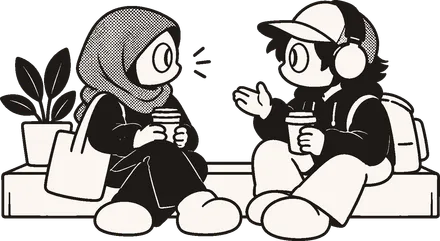
MANA check-inOnly you can see your answer
Priya never saw "meh". She just asked twice, and that second question is the whole course.
The people having the hardest time are often the ones turning up, cracking jokes and telling you they're alright. Nobody asks, and it's not because nobody cares, it's because there's nothing obvious to go on.
Most support waits for someone to put their hand up. MANA works a step earlier, with the person who'd never ring a helpline or use the EAP, and who'd tell you they're fine if you only asked once.
We're the friendly bit that comes first.
That's what the name means, by the way.
"How's things?"
Being close enough to notice is the only qualification you need.
"No, really. How are you doing?"
Ask, then ask again. The first "fine" is a warm-up.
"That sounds hard. Go on."
Listen without jumping in to fix it, because that's where the real story comes out.
"Want me to sit with you while you call?"
Know when to pass it on, and who to pass it to.
Six short videos you can watch in one go or over a few coffee breaks. You'll learn to notice, ask, listen and hand over well, and nobody will ask you to share your own story.
Watch video 1Made for anyone close enough to notice. If you're having a hard time yourself right now, the course can wait. Samaritans are on 116 123, any time.
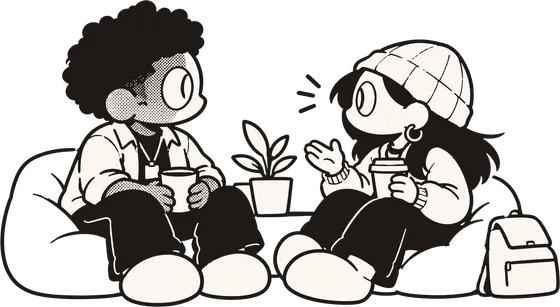
Free to watch, no sign-up. If you'd like a digital badge at the end, leave your name and email. It's yours, and it's only shared with your employer if you say so.
 Slackor
 Microsoft Teams
Most training gets forgotten long before anyone needs it. MANA keeps it going with a quick check-in each week where your team already talks, a clear route to a real person when someone needs more, and proper support for the people doing the asking.
Volunteers take the free course. At least one in ten of your people, and someone in every team, shift and site.
One tap a week: how's your week, honestly. Nobody sees anyone's answer. If you'd like someone to check in, you pick who.
A written route to a real person when someone needs more than a chat, so nobody's left making it up.
Monthly group supervision with someone qualified, and a debrief call after a hard conversation.
The course is free for everyone. Workplaces pay for the system that keeps it alive and the mark that shows it's real. It sits alongside your EAP, not instead of it.
We're taking on our first pilot companies, ideally 50 to 250 people. Three months free, with the price agreed upfront.
Talk to us about a pilot →A first aider network is usually a handful of people, and they're often left holding things with nowhere to put them. MANA gets everyone close enough to notice asking, and gives the people who hear the hard stuff, first aiders included, somewhere to take it. Your first aiders are part of it, not replaced by it.
The reminders, forms and paperwork run themselves, so your volunteers spend their time on people instead of chasing spreadsheets. Every setup call, supervision session, debrief and annual review is with a real person. No AI writes the check-ins, replies to anyone about how they're doing, or ever sees what anyone said.
How we handle your data →People here get asked, and someone knows what to do with the answer.
Reviewed every year by a person. If the help stops being real, the mark goes.
How the Standard works →
Free, always
From £175 a month, billed yearly
Let's talk
First pilots are for teams of 50 to 250. Bigger than that? Get in touch anyway. See full pricing →
That's two million people trained and 50,000 workplaces carrying the mark. We'll publish how it's going every year, including the bits that don't work.
Yes. The course is free for everyone, for good, with no sign-up wall. Workplaces only pay for the check-in system, the support for their volunteers and the MANA Standard.
Nobody. Not your manager, not HR, not the volunteers, and not us. If you'd like someone to check in on you, you pick a volunteer and they get a nudge to say hello. They never see what you answered.
No. MANA teaches ordinary people to notice, ask and listen, then hand over to people who are qualified. It's not therapy, counselling or a crisis line, and it won't turn you into any of those.
Anyone close enough to notice when someone's not themselves: colleagues, managers, friends, family. You don't need any background in mental health. It isn't clinical training, and it isn't for anyone who's in crisis right now.
No, never. Volunteers only, for the course and for the check-ins. Someone made to ask is worse than nobody asking, and people can tell.
MANA isn't the right place in a crisis, but these people are, and they're brilliant.